In Matthew 15:24 Jesus our Lord (Matthew 28:18) and Saviour (John 3:14-16) speaks of him first focusing on his biological nationality. In Matthew 28:16-20 and Acts 1:8, Jesus dramatically expands his focus through his apostles to include those of all other nationalities. Paul echoes this principle in Romans 1:16-17.
Psalm 99:4 (KJV) The king’s strength also loveth judgment; thou dost establish equity, thou executest judgment and righteousness in Jacob
Psalm 99:4 commands leadership at all levels in governments and all societal institutions to promote equity and righteous judgment as justice.
Equity is not about sameness but rather closeness not a far-offness. That applies to salvation opportunity as well as in blessings and chastisements on earth. It is theologically reasonable to view the word King in Psalm 99:4 as a metaphor for all leaders such as government at all levels and leaders in all societal institutions under the Lordship and Messiahship of Christ of the New Covenant. Same goes for the word Jacob in Psalm 99:4 as being symbolic of all races, nationalities, and ethnicities. And that includes the two genders of male and female as constrained only by the God established distinctions in hierarchical and functional roles in specific limited areas of life.
The recent United States Supreme Court decision on the Louisiana majority Black voting districts issue has led to a national thrust to eliminate majority Black voting districts by the current Republican Party.
Let’s now look at some factors of equity historically within the period of Reconstruction.
Reconstruction was the post–Civil War era (1865–1877) in which the federal government reintegrated the Southern states, enforced the end of slavery, extended citizenship and voting rights to Black Americans, and attempted—briefly—to reshape Southern society before white supremacist resistance dismantled many of those gains.
During the Reconstruction period, some 16 Blacks are said to have been in national office. Between 1500 and 2000 Blacks reportedly collectively held state and local government offices. That reportedly includes 700 Blacks in Southern state houses and senates.
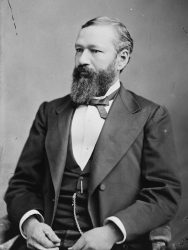
A Black (Biracial) Republican named Pinkney Pinchback was elevated to Acting Governor of Louisiana in 1872 due to the impeachment removal of the then Governor.
Pinchback was born free. His father was White and Mother Black. He had been elected to the Louisiana Senate in 1868. In 1871 Pinchback was President Pro Tempore of the Louisiana State Senate. In 1871 the then Lieutenant Governor died. At that time Pinchback became Acting Lieutenant Governor. In 1872, upon impeachment removal of the then Governor, Pinchback was elevated to Governor for about 35 days from December 9, 1872 to January 13, 1873.
During that period of being Governor, Pinchback signed 10 acts of the legislature into law. A new Governor was elected and took office in January 1873. Pinchback returned to his role in state politics. He ran for the US Senate to represent Louisiana and by some accounts won. However, the whole election not just Pinchback’s race was questioned. That included and mainly so the gubernatorial race. For months Louisiana had two governments due to the controversy. Therefore, Pinchback win as a US Senator was never certified and he was never seated. One lasting legacy is Pinchback was instrumental in establishing Southern University in 1880. Southern University is a part of the Historically Black Colleges and Universities (HBCUs). Southern University main campus is in Baton Rouge Louisiana; it has additional campuses in New Orleans and Shreveport.
Let us now consider some questions regarding the issues of equity and justice in modern times to include the why of the pushback against black majority voting districts.
Is the issue of modern times more of political ideology than race?
Is political ideology more about how well people line up with our Creator God standards as documented in the Bible?
Is the pushback against black majority voting districts a function of the lack of need for such districts or a lack of sensitivity to the lingering effect of past large-scale racism in America?
Does the presence of a reasonable number of black majority voting districts help Blacks to achieve equity without causing harm to Whites?
Pinchback is an example of equity reached for and a high level of equity achieved though under undesirable circumstances of death and impeachment. The key point is he reached for greatness and positioned himself to leverage whatever doors of opportunities opened. He was prepared and walked through the doors presented before him.
Let us so be ready.
Let us resolve to be the best Christian we should be regardless of the unrighteous obstacles put before us by others. Let us not put unrighteous obstacles before each other and indeed not before anyone.
Let us advocate for right. Let us do it now.
Let us do so boldly, without compromise.
Let us, do it now.
Reference: Article on Pinchback by non-profit 64 Parishes Magazine of New Orleans