
Less one gets confused about what this article sets forth, let me say from the outset: I emphatically condemn the American slavery institution that once existed and any lingering support for it; I in no way condone it or justify its implementation. Voluntary slavery is biblical and righteous when regulations are followed. However, American slavery was forced/involuntary slavery and forced slavery of kidnapped/stolen people and such is unbiblical and sinful. Indeed, the overall implementation of slavery and related racism in America was unbiblical and sinful. To the extent racism still exists, it is still unbiblical and sinful.
There is no doubt that the American form of slavery was extremely cruel in far too many instances though there are historical writings that suggest not all slave master were cruel to their slaves. Even if some enslavers were less cruel, the institution itself was inherently brutal and sinful.
American slavery was a system of dehumanization, violence, and generational trauma. It is important that history not be sanitized but rather truth be acknowledged. Even if some enslavers were less cruel, the institution itself was inherently brutal and sinful.
It is also important that the pain that comes from the reality of historical slavery and racism as well as any present-day racism not be minimized.
The legacy of slavery still echoes in systemic injustice. Therefore, all Christians, Black, White, and otherwise, are called to be a voice for righteousness, not just personally but communally.
We are to embrace forgiveness and healing/reconciliation yet not erase or ignore accountability.
In the final analysis, all should understand that the goal isn’t guilt or reverse oppression. The goal is transformation so as to have a more equitable society free of oppressive racism and oppressive classism.
For those who are possible descendants of slaves and those affected by racial injustice, a faithful Christian response is honestly lamenting the horrific reality without imposing guilt upon those alive today, courageously working for justice and against injustice in its present manifestation, resting in the unwavering hope of God’s ultimate triumph over evil, and pursuing reconciliation as a reflection of the saving work of Christ. This also means such people are not to engage in reverse racial injustice/exclusion or stereotypes against those who are possible descendants of those who possibly engaged in racial injustice/exclusion.
For those who are possible descendants of slave masters and other racist, a faithful Christian response is not to assume any guilt or shame but to walk in repair, and solidarity, and pursuing reconciliation as a reflection of the saving work of Christ.
Whether or not someone’s ancestors were involved, every believer today has a role in building a more just and reconciled world.
An 1842 book about “The Religious Instruction of the Negroes in the United States” by Rev. Charles Colcock Jones (1804-1863), a white clergyman, provides a historical account of Christianity and Slavery in America up to that point. Of course, slavery did not officially end until 1865 when the 13th Amendment was passed. Racial discrimination of course continued even pass 1865 but that is not my focus in this article.
I surveyed the book for its scope and intent. The author goes into a great deal of history concerning slavery in the world in general and particularly in America. The author’s goal is to encourage the reader to carry out the Great Commission as outlined in Matthew 28:18-20.
For me, pages 161-171 provide the core purpose of the book which is to encourage (1) the conversion of “Negroes” to Christianity and (2) a proper master-servant relationship as outlined in the Bible.
Indeed, the Bible condemns the American implementation of the master-servant relationship in the form of what we know as American slavery. Yet, the Bible does not condemn all kinds of master-servant relationships.
Rev. Jones holds that the Negro slaves were heathens who needed Jesus. He considered them incapable of receiving religious instructions excepted in limited cases. Yet, he states he is not sure if that lack of capability is due to the conditions the slave were under or if it had with how God created them (See page 178.). Nevertheless, he rightly urges conversion of blacks to Christianity and treatment of them according to biblical instruction. In fact, he urges the slave owners to treat blacks as fully human worthy of equitable treatment and justice just as the bible declares all people to be. He was right since Christianity is the superior faith/religion simply because of Jesus Christ as there is no greater hope for humankind than the biblical Jesus Christ.
Did all (whites and blacks) people conform to biblical instruction? No, not then and not now! That is the spiritual battle in which we (blacks and whites) are engaged.
The Library of Congress collection labeled “Born in Slavery: Slave Narratives from the Federal Writers’ Project, 1936 to 1938” provides accounts of the treatment of slaves including inhumaneness. Collection may be found here to include reading the rest of the narratives for the examples below.
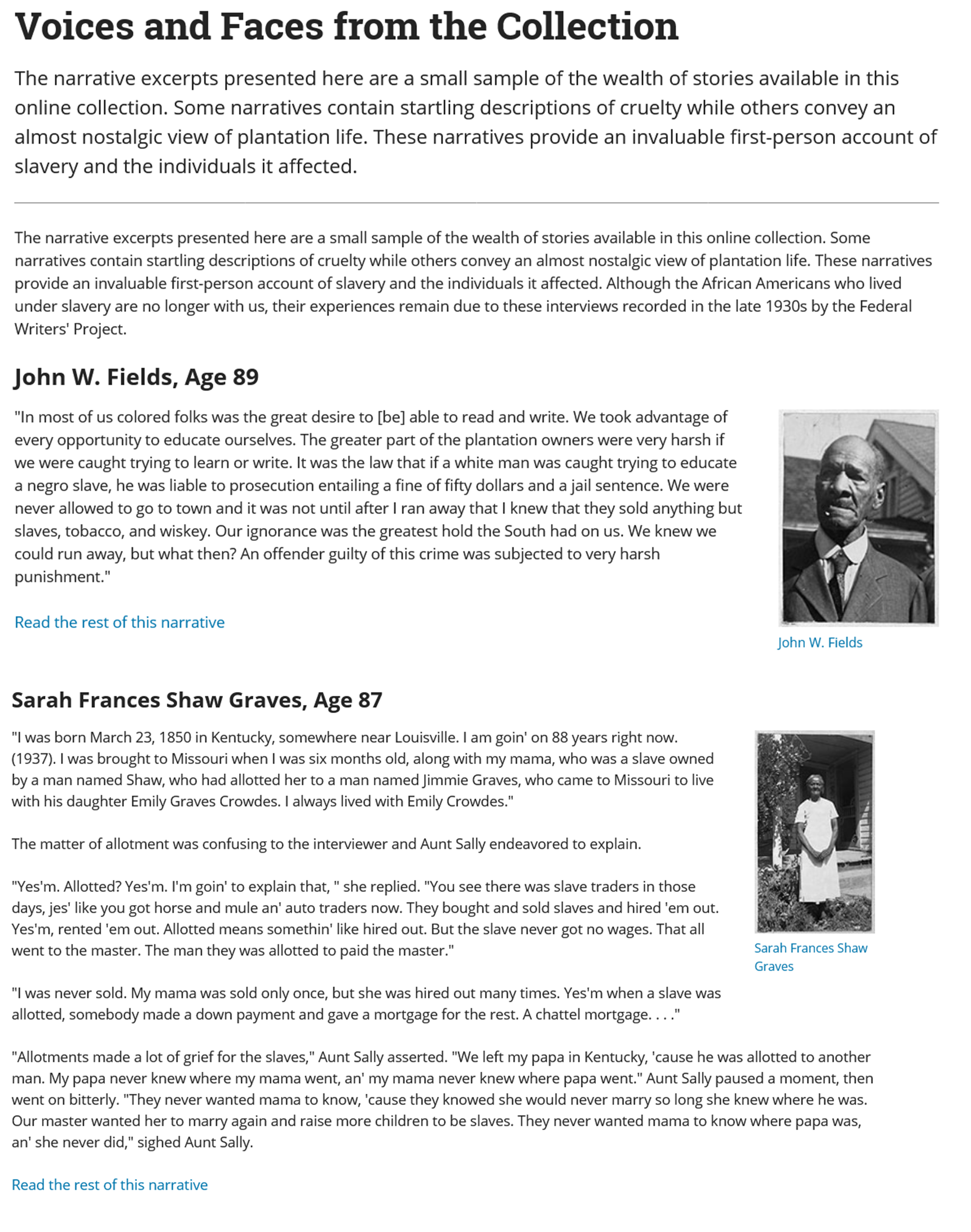
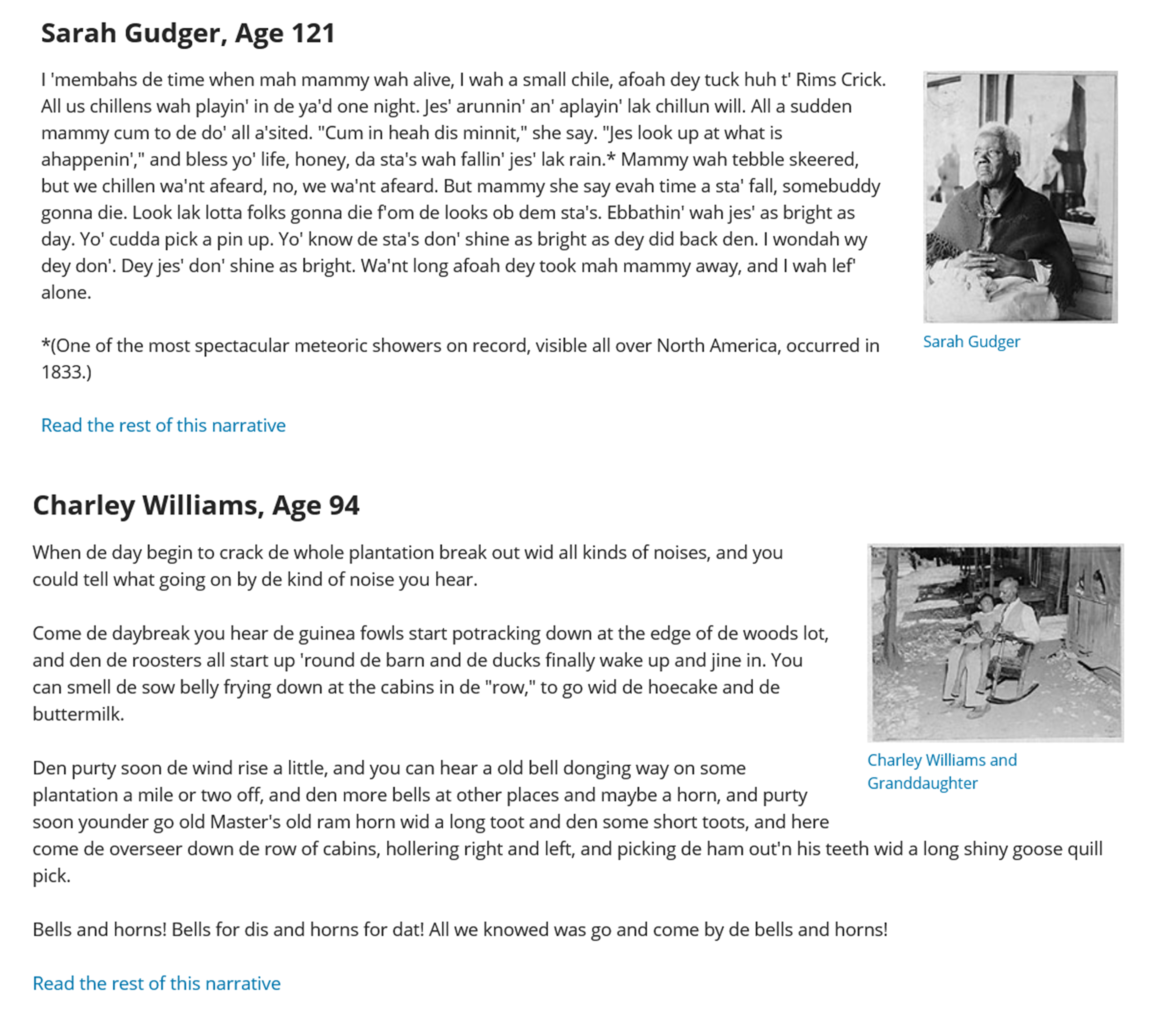
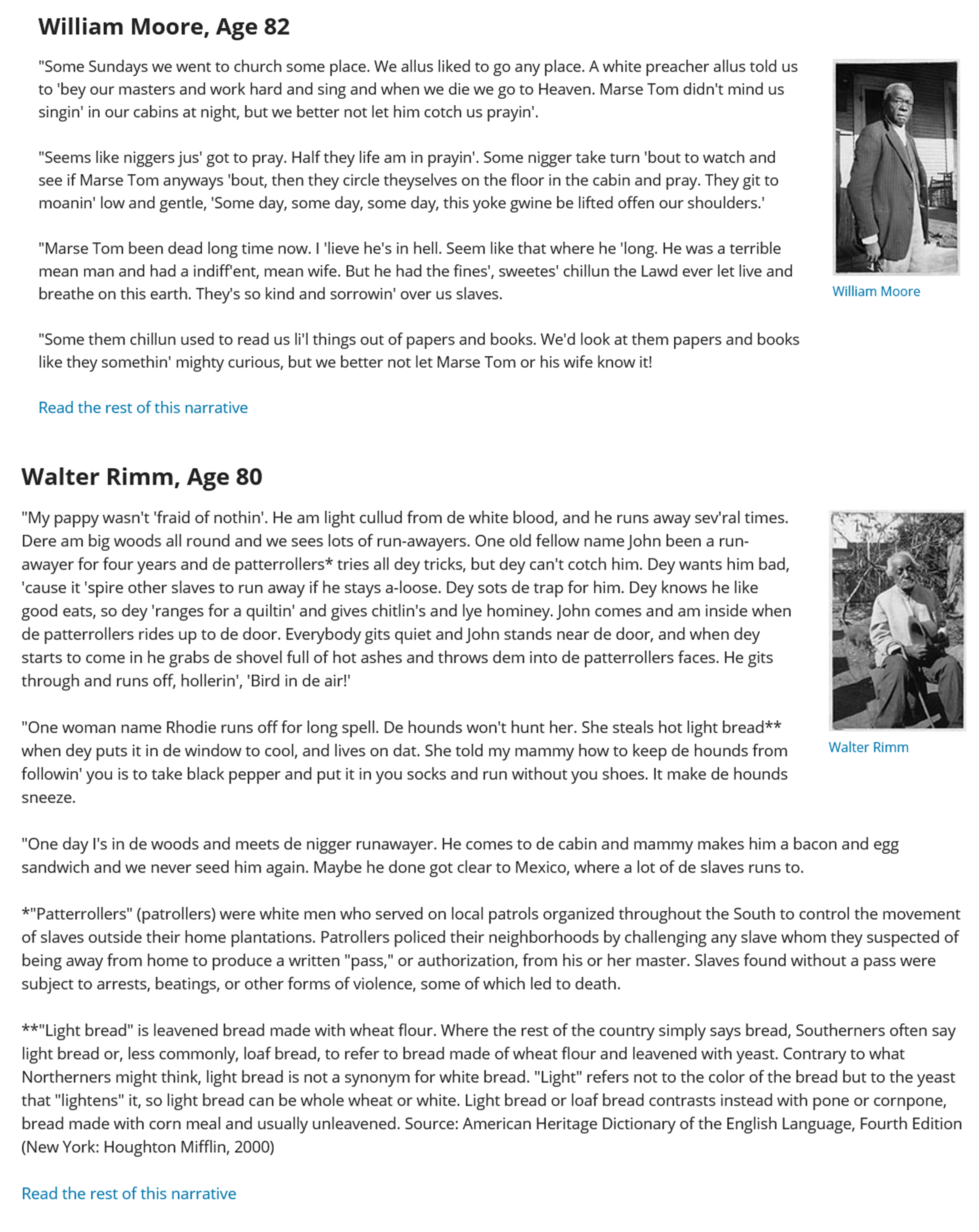
Reverend Jones also gave a sermon on the same topic that has been published. He seemingly gave the sermon first in 1832 prior to the publication of the above book in 1842. A YouTube video reading by Stevie Lundyjr of the published sermon is available in multiple video parts here.
For interested persons, an online version of the book by Rev. Jones may be found at University of North Carolina website here.
My article on the Bible and American Slavery may be found here.
My article on the Basis for American Slavery may be found here.
My article on Confronting Historical Slavery and Racism and Present-Day Racism may be found here.
Additional References:
National African American Museum
Whitney Plantation Museum
Jim Crow Museum